
Helping licensed healthcare professionals, therapists, psychologists, occupational therapists, speech-language pathologists, dietitians, private practice owners, creatives, and service-based business owners with practical support for PLLC formation in New York.
Starting a professional business in New York should not require sorting through conflicting advice about entity formation, licensing rules, and compliance requirements. As a PLLC attorney in New York professionals can trust, I help therapists, healthcare providers, consultants, and practice owners establish the right business structure from the start.
Proper PLLC formation in New York services involve more than filing paperwork. Choosing the correct entity helps support compliance, separate personal and business liability, and build a stronger foundation for growth.
A professional limited liability company New York professionals use is a business structure designed for certain licensed occupations. Unlike a standard LLC, many licensed professionals must form a PLLC to comply with New York requirements.
This often includes therapists, psychologists, psychiatrists, social workers, occupational therapists, speech-language pathologists, chiropractors, dietitians, architects, and other licensed professionals.
Many professionals form the wrong entity because New York’s rules are not always straightforward. A common issue in the PLLC vs LLC in New York licensed professionals discussion is choosing a standard LLC when a PLLC may be required.
Fixing the mistake after opening accounts, signing contracts, or accepting payments is often far more costly than setting up the right structure from the beginning.
I work with licensed professionals across New York, including therapists, psychologists, social workers, doctors, chiropractors, dietitians, and other healthcare providers looking for guidance with PLLC formation in New York requirements and practice setup.
These professionals need legal support that reflects the realities of running a licensed practice, not generic business advice.
Some clients are preparing to start a private practice New York professionals can build with confidence. Others already have clients, office space, referral networks, and growing operations but need help correcting entity, compliance, or business structure issues.
Many discover that the legal side of the practice was never properly addressed. Others are preparing to expand and want a stronger foundation before taking the next step.
Not every client operates a healthcare practice. I also work with consultants, educators, coaches, creatives, founders, and service-based businesses whose work is closely tied to professional expertise, reputation, and personal credibility.
Many face the same challenges when choosing the right business structure, managing compliance requirements, and preparing for future growth.
DIY filing or generic templates often lead to expensive problems later.
Using the wrong entity can create licensing and compliance issues.
Choosing a name that isn’t compliant or available can cause delays.
New York has unique rules like publication that many people miss.
Templates that don’t reflect your business don’t protect you if things go wrong.
Filing services can’t advise you on your profession, risks, or future plans.
Cleaning up mistakes later usually costs more time, money, and stress.
Usually, it’s not. The harder part is understanding the legal and operational decisions surrounding the filing.
One of the most common mistakes involves misunderstanding PLLC vs LLC New York licensed professionals requirements. Many business owners choose a standard LLC because it appears faster and less expensive, only to discover the issue later during insurance reviews, contract negotiations, or business expansion.
New York has naming rules for PLLCs and licensed businesses. Certain words may require approval. Some names may conflict with professional licensing rules. Others may already be unavailable.
Clients are often surprised to learn that branding decisions can create legal and administrative issues if not reviewed early.
Many business owners are unaware that New York requires a publication process after PLLC formation. The rules vary by county, deadlines matter, and missing this requirement can create compliance issues that are often discovered long after the business is up and running.
Another common mistake is relying on generic templates instead of a properly drafted PLLC operating agreement New York professionals can rely on. Even single-owner PLLCs benefit from an agreement that clearly addresses ownership, management authority, operational procedures, and the separation of personal and business activities.
New business owners sometimes:
That creates unnecessary risk and makes cleanup more difficult later.
An incorrect PLLC setup may not cause problems right away, but it can create challenges that follow a business for years. Banking delays, insurance complications, ownership disputes, contract revisions, tax issues, and compliance concerns often stem from decisions made during formation. For licensed professionals, those risks can affect both the business and the reputation behind it.

Online filing companies market themselves as simple, fast, and inexpensive. And to be fair, they can file paperwork. But filing paperwork is not the same thing as legal guidance. DIY platforms generally do not:
They are filing services, not legal advisors. That distinction matters. For example, a therapist forming a private practice may also need guidance regarding: Generic filing services cannot provide strategic legal advice about those issues. Unfortunately, many business owners only discover the gaps after problems arise.
Contract review is not about making every agreement perfect. It is about spotting the terms that could hurt you before they become expensive.
The process begins with a consultation discussing: profession business goals ownership structure future plans existing setup concerns whether a PLLC is the appropriate entity This helps identify issues early before filings are submitted.
Next comes review of: naming requirements licensing considerations entity eligibility potential filing conflicts This step helps reduce delays and avoid preventable filing problems.
Once everything is confirmed, PLLC formation documents are prepared and filed with New York State in line with the New York Department of State’s PLLC requirements. Many clients feel relieved at this stage because they no longer have to guess whether they are setting things up correctly.
A properly drafted operating agreement is an important part of establishing a PLLC, even for single-owner businesses. The operating agreement helps establish: ownership management authority operational procedures internal structure separation between business and personal activity Many online formation platforms either skip this entirely or provide generic templates that do not reflect the realities of licensed professional businesses in New York.
After formation, clients receive guidance regarding: EIN registration business banking considerations foundational business setup basic compliance considerations The goal is not simply to file paperwork, but to help clients understand how to properly operate the business moving forward.
New York’s publication requirement surprises many business owners. While publication costs vary and publication coordination is included in the PLLC formation package, clients are also supported with: publication timelines compliance requirements next steps how the process works This helps reduce the risk of missing one of New York’s most commonly overlooked business requirements.
Most clients are capable, successful professionals. They know that searching how to form a PLLC in New York online is not the same as receiving guidance tailored to their profession and goals.
For many, this is more than forming a business. It is opening a private practice, leaving employment, building independence, and protecting years of education and professional licensing.
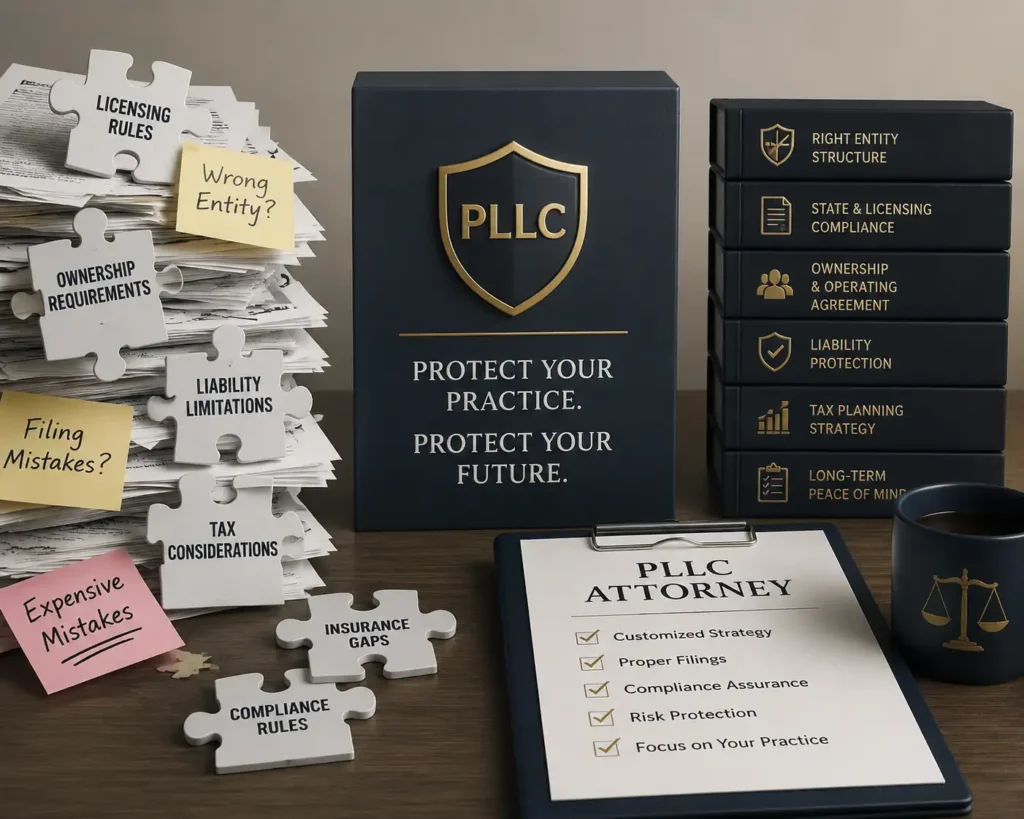
Many professionals delay forming a PLLC because the process feels overwhelming. Conflicting information, uncertainty about costs, and concerns about making mistakes often lead to delays. The challenge is that waiting too long can create larger issues once the business begins growing.
Starting a business should feel exciting, not confusing. You do not need to navigate New York PLLC rules alone while also managing clients, licensing obligations, income goals, and everyday life. A properly formed PLLC is not just paperwork. It is part of building a business that protects your work, supports future growth, and reduces avoidable legal and administrative problems later. If you are ready to start a New York PLLC or are concerned the business may have been set up incorrectly, schedule a consultation to discuss next steps.
Response within 24 business hours